Why the plateau is real — and why it takes so long to be taken seriously
Metabolic adaptation is what the body does after weight is lost: resting energy expenditure falls further than the smaller body alone would predict, appetite hormones shift towards hunger, and unplanned daily movement quietly declines. It happens in people who followed the plan exactly. It has nothing to do with discipline, and it doesn't respond to simply repeating the same restriction harder — which is exactly why it's so frequently confused with cheating, poor tracking or a lack of willpower.
The emotional cost is rarely part of the conversation. Women describe hiding what they eat, avoiding photographs, skipping the beach, cancelling on friends, crying in changing rooms. Many are weighed, lectured and sent home, visit after visit. Some are told the fatigue is stress. Being disbelieved about your own body is, for a lot of women, heavier than the number itself.
Signs women most often describe
No single sign confirms anything on its own, and several other conditions produce a similar picture. Still, these patterns come up repeatedly in patient reports and in the clinical literature:
- A method that reliably worked before — the same foods, the same portions, the same walks — producing nothing now.
- Weight returning within months of every loss, often ending slightly above where it started.
- Hunger that arrives earlier and stays louder than it did before the first diet.
- Afternoon exhaustion, cold hands and feet, and far less spontaneous movement than a few years ago.
- Eating visibly less than a partner or colleague of similar size, with opposite results.
- The same number on the scale sitting differently on the body — softer, and more around the middle.
- A clear change dating from a pregnancy, a change in contraception, or the years around perimenopause.
- Other women in the family describing exactly the same trajectory at the same age.
What it is not
A stalled plateau is frequently confused with several distinct things. Hypothyroidism is an underactive thyroid, usually detectable on blood work, and it produces fatigue, cold intolerance and modest weight gain. PCOS and insulin resistance involve how the body handles glucose and androgens, and often come with irregular cycles or skin changes. Medication effects — some antidepressants, steroids, antipsychotics, beta blockers and hormonal treatments — cause weight gain directly. Self-reported intake is also an imperfect measure — which is a reason clinicians ask for detail rather than a summary, not an accusation. All of these can look identical from the outside, all of them can coexist, and only a clinical evaluation can separate them.
What usually comes next
If the quiz reflects your experience, the constructive step is an evaluation with a professional who works with metabolic and hormonal health — an endocrinologist, an obesity medicine physician, a registered dietitian, or a GP willing to run the basic panel rather than reissue the same advice. Written notes help: when the change began, what each attempt actually involved, how your energy and hunger behaved during and after it, your family history, and every medication you take.
Care is generally long-term rather than a fixed programme — adequate protein, resistance training to protect muscle, sleep, treatment of any underlying condition, medication where it is indicated, and attention to the emotional side of living in a body that has been publicly judged for years. Approaches differ by country and by clinician, and every decision belongs with you and your doctor.
Common questions
Does this quiz diagnose a metabolic problem?
No. It is an educational self-reflection tool. It cannot diagnose anything and it cannot rule anything out. Its only purpose is to help you organise what you are experiencing before speaking with a professional.
Is a slow metabolism the same as a thyroid problem?
No. They are distinct things that can resemble one another and can also occur together. Thyroid disease shows up on blood work; metabolic adaptation after weight loss usually does not, which is part of why it is dismissed. Only a clinician can tell them apart.
Do you store or sell my answers?
No. The quiz runs entirely in your browser. Your selections are never transmitted to a server, never stored, and never linked to you. Closing the page erases them. See our Privacy Policy.
Does this only happen to women?
No — adaptation after weight loss is measured in both sexes. Hormonal life stages and the way weight is talked about socially mean women report it, and report being dismissed about it, far more often.
Can a supplement restart a stalled metabolism?
No. No dietary supplement resets metabolic rate, reverses adaptation or treats a hormonal condition. Some ingredients have been studied for modest, short-term effects on appetite or body weight, which is a different and much narrower claim. Any product discussed on this page is presented in that context only.
Reader question: what is Leantide?
Readers write in about products marketed for stubborn weight, low energy and a metabolism that seems to have stopped, and one name comes up often enough that we looked at it: Leantide, a liquid herbal extract sold as “traditional lymphatic support”. This section is a paid placement and contains affiliate links. That does not change how we have written it: below is what the label states, what the published literature does and does not support for each ingredient, and what the advertiser claims that we could not verify.
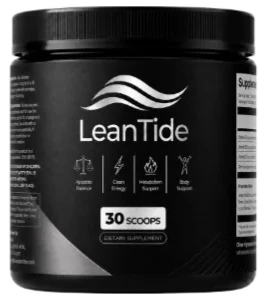
- Category Dietary supplement — not a drug, not a medical device
- Format Liquid herbal extract, 1 fl oz / 30 ml dropper bottle
- Serving 1/4 teaspoon (1 ml); 30 servings per container
- Blend Proprietary blend, 300 mg per serving
- Extracts of Cleavers aerial parts (Galium aparine), Red clover flower (Trifolium pratense), Stillingia root (Stillingia sylvatica), Prickly ash bark (Zanthoxylum americanum)
- Other Vegetable glycerin, water
- Sold by The manufacturer, direct through its own website
Specification as published by the manufacturer at the time of writing. Daily Value (DV) is not established for this blend, and amounts of the individual extracts are not disclosed separately — a common practice with proprietary blends, and a real limitation when you try to compare a product against published research.
The four ingredients, and what the evidence actually shows
Cleavers (Galium aparine). A common hedgerow plant with a long history in Western herbalism as a “lymphatic tonic” and mild diuretic. That history is genuine and documented in traditional materia medica — see the Galium entry in King's American Dispensatory (Felter & Lloyd, 1898). The modern evidence is not: published work is largely phytochemical and laboratory-based, and we are not aware of controlled human trials measuring body weight, appetite, body composition or energy expenditure with cleavers. A diuretic effect, if present, moves water rather than fat, and the scale reflects that difference within days. Traditional use is a reason to study something; it is not evidence that it works.
Red clover (Trifolium pratense). The best-studied ingredient in the blend, though not for this purpose. Red clover isoflavones have been examined mainly in menopausal symptoms, where reviews report inconsistent and generally modest effects (Booth et al., Menopause 2006; Ghazanfarpour et al., J Obstet Gynaecol 2016), and in lipid and bone endpoints. Evidence specific to weight loss, waist circumference or metabolic rate is thin, and where body-weight outcomes appear at all they are usually secondary measures in trials designed to test something else. Red clover isoflavones are phytoestrogens, which matters for safety (see below) more than it does for weight.
Stillingia root (Stillingia sylvatica). A plant used by 19th-century Eclectic physicians as an “alterative”, catalogued in King's American Dispensatory (Felter & Lloyd, 1898). We could not identify modern controlled human trials of stillingia for any indication, weight included. Its presence here reflects a traditional formula, not a contemporary evidence base.
Prickly ash bark (Zanthoxylum americanum). Traditionally described as a circulatory stimulant (Xanthoxylum entry, King's American Dispensatory, 1898). Published research on the Zanthoxylum genus is mostly preclinical — antimicrobial, anti-inflammatory and analgesic activity in laboratory models (Patiño et al., IntechOpen, 2012). Again, we found no human trials relevant to body weight, appetite or metabolic rate.
About the “sluggish lymph” and “boosts your metabolism” framing
The lymphatic system returns fluid and proteins from tissue back to the bloodstream, and when it is impaired, fluid accumulates. That much is settled physiology. What does not follow is that impaired lymph flow is why the scale has stopped moving, or that drinking a herbal extract measurably improves lymph flow in the first place. Retained fluid and stored fat are different tissues, they respond to different things, and only one of them is what most women mean when they say the weight will not shift.
The metabolic half of the claim runs into the same problem. Resting energy expenditure is roughly proportional to lean mass, and after weight loss it falls by more than that change alone accounts for. Ingredients marketed as thermogenic are studied for small, short-term effects on energy expenditure, and a systematic review of dietary supplements and alternative therapies for weight loss found the evidence for them weak and inconsistent (Batsis et al., Obesity 2021). What does have a trial base for protecting metabolic rate during weight loss is the programme itself — resistance training, adequate protein and long-term behavioural support — and reviews describe those benefits as moderate and dependent on the whole programme rather than any single component (Hall & Kahan, Med Clin North Am 2018).
What the manufacturer says — and what we could not verify
The advertiser's own website refers to an observational study said to link everyday complaints such as stubborn weight, puffiness and fatigue to slowed lymphatic flow. We asked for the source and could not locate it in any peer-reviewed journal or trial registry, and no author, institution or publication date is given for it. Because we cannot link you to the document, we do not repeat its figures here and we place no weight on it. Two points hold regardless: an observational study cannot establish that one thing causes another, and a study about a mechanism is not a study about a product.
The manufacturer also states that the product is sold directly through its own website, with a 30-day satisfaction guarantee. Pricing, shipping, guarantee terms and returns are set and administered by the manufacturer and shown on its site — not here.
Considerations before trying it
- Dietary supplements are not required to demonstrate efficacy before being sold, and they are not equivalent to prescription treatment.
- Red clover contains phytoestrogens. Anyone with a hormone-sensitive condition, or taking tamoxifen, hormone therapy or anticoagulants, should speak with a physician first.
- Cleavers is traditionally used as a diuretic. Combining it with prescription diuretics, or using it with kidney disease, warrants medical advice.
- Not for use in pregnancy or while nursing, or by anyone under 18.
- Weight that changes sharply without a change in what you eat, or comes with palpitations, hair loss or severe fatigue, needs medical evaluation — not a supplement.
- Nothing in this section is a treatment for hypothyroidism, PCOS, insulin resistance or obesity. No dietary supplement treats, cures or reverses any of them.
- Individual results vary, and some people notice nothing at all.
Reasonable to say
- Ingredients and serving size are disclosed openly on the label
- Simple traditional formula, one daily serving, liquid rather than capsules
- Sold direct, with published contact details and a stated guarantee period
- No stimulants, no alcohol; short ingredient list
Not reasonable to say
- That the blend has been tested in a published clinical trial — it has not
- That it treats a stalled metabolism or reverses any diagnosed condition
- That the study the advertiser refers to demonstrates the product works — we could not obtain it
- That individual ingredient amounts are known — they are not disclosed
Bottom line
Leantide is a traditional herbal formula sold into a category — stubborn weight, low energy and a metabolism that appears to have stalled — where the demand is enormous and the good evidence is concentrated in other interventions entirely. If you want to try it, that is a legitimate personal choice; go in understanding that you are buying a traditional preparation with no modern human data for weight, not a tested treatment, and tell your doctor you are taking it. If your diet has stopped working, your energy has dropped and the weight returns every time, the priority is the evaluation described earlier on this page, not a bottle of anything.
References for this section
- Felter, H. W., & Lloyd, J. U. (1898). King's American Dispensatory, 18th ed. Cincinnati: Ohio Valley Co. Full text of the three entries cited above: Stillingia, Galium (cleavers), Xanthoxylum (prickly ash). Historical source: it documents traditional use in 1898, and is not evidence of efficacy.
- Booth, N. L., Piersen, C. E., Banuvar, S., et al. (2006). “Clinical studies of red clover (Trifolium pratense) dietary supplements in menopause: a literature review.” Menopause, 13(2), 251–264. Literature review, University of Illinois at Chicago / NIH Botanical Center. DOI 10.1097/01.gme.0000198297.40269.f7.
- Ghazanfarpour, M., Sadeghi, R., Latifnejad Roudsari, R., et al. (2016). “Red clover for treatment of hot flashes and menopausal symptoms: a systematic review and meta-analysis.” Journal of Obstetrics and Gynaecology, 36(3), 301–311. Systematic review and meta-analysis, Mashhad University of Medical Sciences, Iran. DOI 10.3109/01443615.2015.1049249.
- Patiño, L. O. J., Prieto, R. J. A., & Cuca, S. L. E. (2012). “Zanthoxylum genus as potential source of bioactive compounds.” In Bioactive Compounds in Phytomedicine. IntechOpen, published 18 January 2012. Preclinical review, Universidad Nacional de Colombia. DOI 10.5772/26037.
- Batsis, J. A., Apolzan, J. W., Bagley, P. J., et al. (2021). “A systematic review of dietary supplements and alternative therapies for weight loss.” Obesity (Silver Spring), 29(7), 1102–1113. Systematic review commissioned by The Obesity Society. DOI 10.1002/oby.23110.
- Rosenbaum, M., & Leibel, R. L. (2010). “Adaptive thermogenesis in humans.” International Journal of Obesity, 34(Suppl 1), S47–S55. Review, Columbia University Medical Center, New York. Free full text.
- Wilding, J. P. H., Batterham, R. L., Calanna, S., et al. (2021). “Once-weekly semaglutide in adults with overweight or obesity.” New England Journal of Medicine, 384(11), 989–1002. Randomised, double-blind, placebo-controlled phase 3 trial (STEP 1), 129 sites in 16 countries, completed 2020. DOI 10.1056/NEJMoa2032183.
- Jastreboff, A. M., Aronne, L. J., Ahmad, N. N., et al. (2022). “Tirzepatide once weekly for the treatment of obesity.” New England Journal of Medicine, 387(3), 205–216. Randomised, double-blind, placebo-controlled phase 3 trial (SURMOUNT-1), 119 sites in 9 countries, completed 2022. DOI 10.1056/NEJMoa2206038.
Every reference above links directly to the source, and states who conducted the work, where, and when. They describe the ingredient classes and the comparator treatments discussed above. None of them studied Leantide, no published study of the finished product exists to our knowledge, and citing this literature is not an endorsement of the product by the authors, institutions or journals named.
Preparing for the appointment
Women who are eventually evaluated properly tend to have one thing in common: they arrived with information already written down. A history of dieting is hard to describe under pressure, and a ten-minute consultation rewards preparation. Before you go, put the following on a single page:
- When it started. Approximate age, and whether it coincided with puberty, a pregnancy, a change in contraception, a period of high stress, or perimenopause.
- What you have actually tried. Each attempt, roughly how long it lasted, what you lost, and what happened in the year afterwards.
- Energy and temperature. Afternoon fatigue, cold hands and feet, hair and skin changes, and how much you move on an ordinary day compared with a few years ago.
- Hunger. Whether it has become stronger since you first restricted, when in the day it peaks, and how it affects sleep, work and mood.
- Medication and cycle. Everything you take, including contraception and antidepressants, and whether your cycle has changed.
- Family pattern. Which female relatives describe the same trajectory at the same age.
Questions worth asking
You are allowed to ask direct questions, and a good clinician will welcome them. Some that patients report finding useful:
- Based on my history and examination, does this look like metabolic adaptation, a thyroid problem, PCOS, insulin resistance, a medication effect, or a combination?
- What in my results points towards that conclusion, and what points against it?
- Which blood work is worth running to rule out other causes?
- Is any of my current medication contributing, and is there an alternative?
- Given my history of regain, what would you change about the approach rather than the effort?
- Which specialist should manage this long-term, and can you refer me?
If you are told only to eat less and move more, without an examination, blood work or any of the above being addressed, asking for a second opinion is a reasonable step — not a difficult-patient move.
Where to find reliable information and support
Independent, non-commercial organisations publish patient guides, clinician directories and research updates. We have no affiliation with any of them and receive nothing from listing them:
- Obesity Action Coalition — patient advocacy, education and material on weight bias (US).
- The Obesity Society — scientific society publishing research and clinical guidance (US).
- NIDDK — Weight Management — government patient information on metabolism, weight and related conditions (US).
- Obesity UK — charity providing information and peer support in the United Kingdom.
Peer support matters more than it sounds. Research on weight stigma has documented measurable psychological harm — including depressive symptoms and avoidance of healthcare — among people who experience it (Puhl & Heuer, Am J Public Health 2010). That is not a personality trait; it is a predictable response to years of effort, visible change and being disbelieved. Addressing that side of it is part of proper care, not an optional extra.
Sources
- Fothergill, E., Guo, J., Howard, L., et al. (2016). “Persistent metabolic adaptation 6 years after ‘The Biggest Loser’ competition.” Obesity (Silver Spring), 24(8), 1612–1619. Prospective follow-up study, National Institute of Diabetes and Digestive and Kidney Diseases (NIDDK), Bethesda, MD. Free full text.
- Sumithran, P., Prendergast, L. A., Delbridge, E., et al. (2011). “Long-term persistence of hormonal adaptations to weight loss.” New England Journal of Medicine, 365(17), 1597–1604. Clinical study of 50 adults, University of Melbourne, Australia. DOI 10.1056/NEJMoa1105816.
- Rosenbaum, M., & Leibel, R. L. (2010). “Adaptive thermogenesis in humans.” International Journal of Obesity, 34(Suppl 1), S47–S55. Review, Columbia University Medical Center, New York. Free full text.
- Greenway, F. L. (2015). “Physiological adaptations to weight loss and factors favouring weight regain.” International Journal of Obesity, 39(8), 1188–1196. Review, Pennington Biomedical Research Center, Louisiana State University. Free full text.
- Hall, K. D., & Kahan, S. (2018). “Maintenance of lost weight and long-term management of obesity.” Medical Clinics of North America, 102(1), 183–197. Review, NIDDK and Johns Hopkins Bloomberg School of Public Health. Free full text.
- Greendale, G. A., Sternfeld, B., Huang, M., et al. (2019). “Changes in body composition and weight during the menopause transition.” JCI Insight, 4(5), e124865. Analysis of the Study of Women's Health Across the Nation (SWAN) cohort, University of California, Los Angeles. Free full text.
- Wu, Y., Zhai, L., & Zhang, D. (2014). “Sleep duration and obesity among adults: a meta-analysis of prospective studies.” Sleep Medicine, 15(12), 1456–1462. Meta-analysis, Qingdao University Medical College, China. DOI 10.1016/j.sleep.2014.07.018.
- Puhl, R. M., & Heuer, C. A. (2010). “Obesity stigma: important considerations for public health.” American Journal of Public Health, 100(6), 1019–1028. Review, Rudd Center for Food Policy and Obesity, Yale University. Free full text.
Sources are listed to show where the general statements on this page come from. They describe metabolism and weight regulation in the medical literature; they do not evaluate any commercial product, and nothing here should be read as an endorsement by the cited authors or journals.
Advertising disclosure. This page carries paid placement. The section labelled “Sponsored content” is an advertisement and contains affiliate links; if you click through and make a purchase, we may receive a commission at no additional cost to you. Compensation does not change the quiz, the educational article or the sources cited, and we do not accept payment to remove stated limitations or criticism from a product write-up.
Medical disclaimer. The content on this page is general information and education only. It is not medical advice, it does not create a doctor–patient relationship, and it is not a substitute for consultation with a qualified healthcare professional. The self-assessment on this page does not diagnose any condition. Always seek the advice of your physician or another qualified provider with any questions about a medical condition, and never disregard professional advice or delay seeking it because of something you read here.
Supplement disclaimer. These statements have not been evaluated by the Food and Drug Administration. Any product referenced is a dietary supplement and is not intended to diagnose, treat, cure or prevent any disease. Individual results vary and are not guaranteed. Do not use as a substitute for prescribed treatment.
Urgent symptoms. Rapid or unexplained weight change, palpitations, fainting, severe fatigue, new swelling or shortness of breath require prompt medical attention. If your relationship with food or with your body feels out of control, that is a medical topic as well, and it deserves proper support rather than another diet. Do not use this page to delay care.
Editorial note. No statistics on this page are presented as precise figures for any individual, and published estimates vary between sources. This page contains no patient testimonials, no weight-loss claims for any product, and no before-and-after imagery. Product images are supplied by the advertiser.